

No Pressure Book Club
Join us for a no pressure book club! Each month, we'll curate a selection of books from a specific genre; you can pick a book from our list or choose your own! Read the book and join us on the first Wednesday of the next month to discuss your thoughts with others. Can’t make the meeting? No worries! We’ll share our selections on social media, where you can share any thoughts you had while reading or about the genre as a whole.
October 2026 | Horror
Wednesday, November 4 | 5:00PM - 6:00PM
Click on a book cover and log into NoveList with your library card to see reviews and search the catalog!
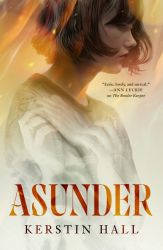
Asunder by Kerstin Hall
Karys Eska is a deathspeaker, locked into a contract with a terrifying eldritch entity who granted her the ability to communicate with the newly dead. She pays the rent by investigating suspicious deaths around the troubled city she calls home. When a job goes sideways and connects her to Ferain, a dying stranger with dangerous secrets, her entire world is upended. Together, they journey to the heart of a faded empire, all the while haunted by arcane horrors and the unquiet ghosts of their pasts.
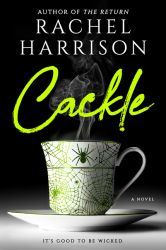
Cackle by Rachel Harrison
After seeking a fresh start, Annie accepts a teaching position that moves her from Manhattan to a small village upstate – perfect, picturesque, and the people are all friendly and warm. There, Annie meets and can’t help but be drawn to the beautiful, charming, self-possessed Sophie, even though the rest of the townsfolk seem…a little afraid of her. And like, okay. So, Sophie’s appearance is uncanny and ageless, her mansion in the middle of the woods feels a little unearthly, and she does seem to wield a certain power…but she couldn’t be…could she?
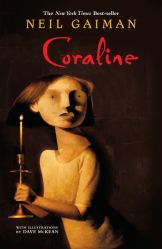
Coraline by Neil Gaiman
In Coraline's family's new flat is a peculiar door, and on the other side is a passage to another flat in another house just like her own. Only it's different. The food is better. The toy box is filled with wind-up angels that flutter, books whose pictures move, and dinosaur skulls that chatter their teeth. But there's another mother, and another father, and they want Coraline to stay with them and be their little girl. They want to change her and never let her go.
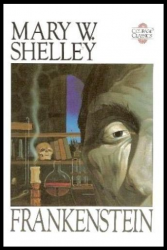
Frankenstein by Mary Wollstonecraft Shelley
A classic that has spawned dozens of adaptations and retellings!
A monster assembled by a scientist from parts of dead bodies develops a mind of his own as he learns to loathe himself and hate his creator.
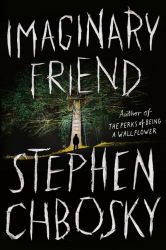
Imaginary Friend by Stephen Chbosky
On the run from an abusive relationship, Kate Reese and her son, Christopher, find themselves drawn to the tight-knit community of Mill Grove, Pennsylvania. It's as far off the beaten track as they can get and seems like the perfect place to finally settle down. Then Christopher vanishes. For six long days, no one can find him. When he emerges from the woods at the edge of town, he returns with a voice in his head only he can hear, with a mission only he can complete: Build a treehouse in the woods by Christmas, or his mother and everyone in the town will never be the same again.
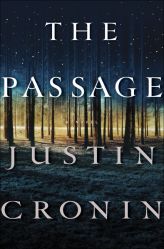
The Passage by Justin Cronin
A security breach at a secret U.S. government facility unleashes the monstrous product of a military experiment. As civilization crumbles into a primal landscape of predators and prey, two people flee in search of sanctuary: FBI agent Brad Wolgast and six-year-old orphan Amy Harper Bellafonte. Wolgast is determined to protect her from the horror set loose, but for Amy, escaping the bloody fallout is only the beginning of a much longer odyssey—spanning miles and decades—toward the time and place where she must finish what should never have begun.
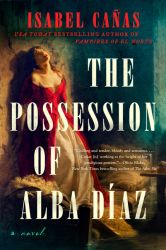
The Possession of Alba Díaz by Isabel Cañas
As plague sweeps through Zacatecas, Alba flees with her wealthy merchant parents and fiancé, Carlos, to his family’s isolated mine for refuge. But safety proves fleeting as other dangers soon bare their teeth: Alba begins suffering strange hallucinations, sleepwalking, and violent convulsions. Elías, haunted by a troubled past, knows that Alba, as his cousin’s betrothed, is none of his business. Which is of course why he can’t help but notice her every time she enters a room or the growing tension between them… and why he notices her deteriorate when the demon’s thirst for blood grows stronger.
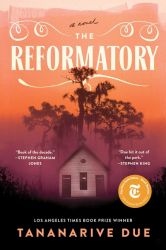
The Reformatory by Tananarive Due
June 1950 in Jim Crow Florida, twelve-year-old Robbie Stephens, Jr., is sentenced to six months at the segregated reform school, Gracetown School for Boys, The Reformatory as they call it, for kicking the son of the largest landowner in town in defense of his older sister, Gloria. Once a comfort after his mother’s death, Robbie’s talent for seeing ghosts, or haints, quickly becomes a window into a sinister truth at the reformatory. Boys are going missing and the haints hint at something worse. Meanwhile, Gloria is rallying every family member and connection in Florida to find a way to get Robbie out before it’s too late.
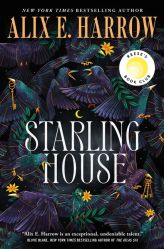
Starling House by Alix E. Harrow
Eden is just another dying town, known only for E. Starling, the reclusive author who wrote The Underland and disappeared. Everyone agrees it’s best to let her house―and its last lonely heir, Arthur Starling―go to rot. Opal knows better than to mess with haunted houses or brooding men, but a job offer from Arthur might be her chance to get her brother out of Eden. As sinister forces converge on Starling House, Opal and Arthur are going to have to make the dire choice to dig up the buried secrets of the past and confront their own fears or let Eden be taken over by literal nightmares.
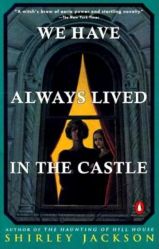
We Have Always Lived in the Castle by Shirley Jackson
Merricat Blackwood lives on the family estate with her sister Constance and her uncle Julian. Not long ago there were seven Blackwoods—until a fatal dose of arsenic found its way into the sugar bowl one terrible night. Acquitted of the murders, Constance has returned home, where Merricat protects her from the curiosity and hostility of the villagers. Their days pass in happy isolation until Cousin Charles appears. Only Merricat can see the danger, and she must act swiftly to keep Constance from his grasp.
November 2026 | History
Wednesday, December 2 | 5:00PM - 6:00PM
Click on a book cover and log into NoveList with your library card to see reviews and search the catalog!
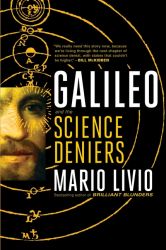
Galileo and the Science Deniers by Mario Livio
Galileo, a freethinker who followed the evidence and one of the most significant figures behind the scientific revolution, was put on trial with his life in the balance for refusing to renounce his scientific convictions. Based on careful observations and ingenious experiments, his discoveries contradicted conventional wisdom and the teachings of the church at the time. Consequently, in a blatant assault on freedom of thought, his books were forbidden by church authorities. Astrophysicist and bestselling author Mario Livio draws on his own scientific expertise to provide captivating insights into how Galileo reached his bold new conclusions about the cosmos and the laws of nature.
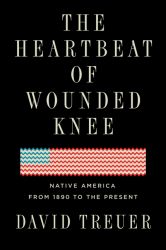
The Heartbeat of Wounded Knee by David Treuer
The received idea of Native American history—as promulgated by books like Dee Brown's mega-bestselling 1970 Bury My Heart at Wounded Knee—has been that American Indian history essentially ended with the 1890 massacre at Wounded Knee. Not only did one hundred fifty Sioux die at the hands of the U. S. Cavalry but Native civilization did as well. Growing up Ojibwe on a reservation in Minnesota and training as an anthropologist, David Treuer has uncovered a different narrative. Because they did not disappear—and not despite but rather because of their intense struggles to preserve their language, their traditions, their families, and their very existence—the story of American Indians since the end of the nineteenth century to the present is one of unprecedented resourcefulness and reinvention.
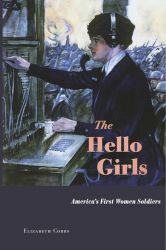
The Hello Girls by Elizabeth Cobbs
In 1918, the U.S. Army Signal Corps sent 223 women to France to help win World War I. They were masters of the latest communications technology: the telephone switchboard. Men called them the Hello Girls. They were America’s first women soldiers. Discharged in 1920; the Army unexpectedly dismissed them without veterans’ benefits. A handful of undaunted survivors carried a sixty-year battle to triumph in 1979. With the help of the National Organization for Women, Senator Barry Goldwater, and a crusading young Seattle attorney, they defeated the U.S. Army to win their Victory Medals at last.
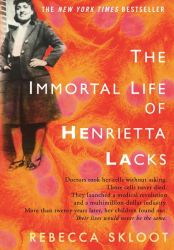
The Immortal Life of Henrietta Lacks by Rebecca Skloot
Henrietta Lacks was a poor farmer whose cells, taken without her consent, became vital for huge advances in science. The first "immortal" human cells grown in culture, they are still alive today despite her being dead for more than sixty years. Yet she is buried in an unmarked grave, and her family did not learn of her "immortality" until twenty plus years after her death, when scientists began using her family in research without informed consent. The story of her family is inextricably connected to the dark history of experimentation on African Americans, the birth of bioethics, and the legal battles over whether we control the stuff we are made of.
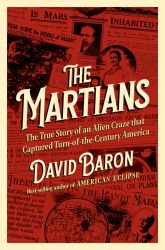
The Martians by David Baron
The Martians begins in the 1890s with Percival Lowell, a wealthy Harvard scion who (almost) convinced a generation of astronomers that grainy telescopic photographs of Mars revealed meltwater and an intricate canal system. Tesla announced he had received Martian radio signals. Biologists debated whether Martians were winged or gilled. Martians headlined Broadway shows, and a new genre called science fiction arose. Many Americans believed there was indeed life on Mars. While Lowell’s claims were savagely debunked, his influence sparked a compulsive interest in Mars and life in outer space that continues to this day.
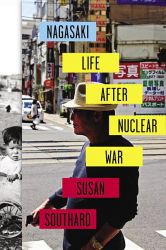
Nagasaki: Life After Nuclear War by Susan Southard
A powerful and unflinching account of the enduring impact of nuclear war, told through the stories of those who survived. Nagasaki takes readers from the morning of the bombing to the city today, telling the first-hand experiences of five survivors, all of whom were teenagers at the time of the devastation. Susan Southard has spent years interviewing hibakusha (“bomb-affected people”) and researching the physical, emotional, and social challenges of post-atomic life. She weaves together dramatic eyewitness accounts with searing analysis of the policies of censorship and denial that colored much of what was reported about the bombing both in the United States and Japan.
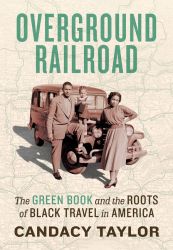
Overground Railroad by Candacy Taylor
Published from 1936 to 1966, the Green Book was a resourceful and innovative solution to a horrific problem - a time when black travelers couldn’t eat, sleep, or buy gas at most white-owned businesses. Hailed as the “black travel guide to America,” it listed hotels, restaurants, gas stations, and other businesses that were safe for black travelers. It took courage to be listed in the Green Book, and Overground Railroad celebrates the stories of those who put their names in the book and stood up against segregation.
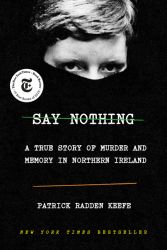
Say Nothing by Patrick Radden Keefe
In December 1972, Jean McConville, a thirty-eight-year-old mother of ten, was dragged from her Belfast home by masked intruders, her children clinging to her legs. They never saw her again. Her abduction was one of the most notorious episodes of the vicious conflict known as The Troubles. This book details the bitter conflict in Northern Ireland and its aftermath. The tale of a society wracked by a violent guerrilla war, a war whose consequences have never been reckoned with.
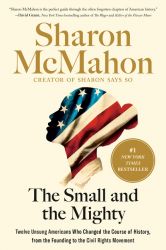
The Small and the Mighty by Sharon McMahon
Sharon McMahon proves that the most remarkable Americans are often ordinary people who didn’t make it into the textbooks. Not the presidents, but the telephone operators. Not the aristocrats, but the schoolteachers. Through meticulous research, she discovers history’s unsung characters and brings their rich, riveting stories to light for the first time.
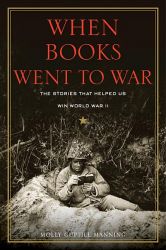
When Books Went to War by Molly Guptill Manning
When America entered World War II, it faced an enemy that banned and burned over 100 million books. Outraged librarians gathered 20 book million donations to send to American troops. Then the government and the publishing industry stepped in, sending out 1,200 different titles of every type in lightweight paperbacks. Soldiers read them while waiting to land at Normandy; amid battles in the Pacific; in field hospitals; and on long bombing flights. They wrote to the authors, many of whom responded to every letter. They helped rescue The Great Gatsby from obscurity. They made Betty Smith, author of A Tree Grows in Brooklyn, into a national icon.